

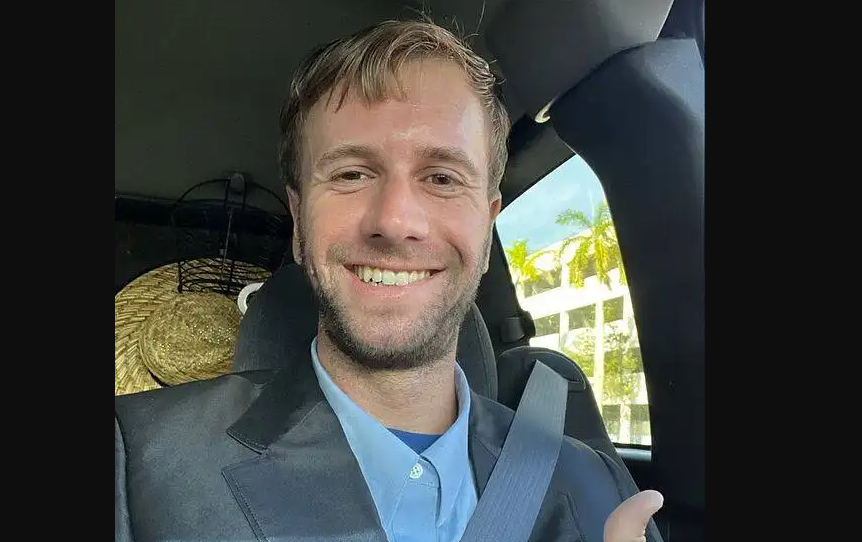
A 33-year-old Florida man sent his father a heartbreaking final message telling him he loved him before a terrifying encounter with a massive grizzly bear ended his life inside Montana’s Glacier National Park.
Anthony Pollio, an experienced outdoorsman from Davie, Florida, was hiking alone through the rugged wilderness on May 3, 2026, when he apparently surprised an adult male grizzly along a steep, isolated mountain trail.
What followed was a desperate encounter that ended with Pollio suffering fatal injuries despite managing to deploy his bear spray.
Investigators later reconstructed the horrifying sequence of events, revealing that the young man was attacked, tumbled nearly 100 feet down a mountainside and apparently attempted to climb back toward the trail before the bear attacked him again.
His body was discovered three days later, approximately 50 feet off the trail in a densely wooded area.
For his devastated father, Arthur Pollio, one of the most painful reminders of the tragedy is the final message his son left while enjoying what was supposed to be another unforgettable adventure.
“It’s wild out here. I love you, Dad,” Anthony said in the message.
The words have taken on heartbreaking significance for a family that never imagined their son’s love of the outdoors would lead to such a devastating ending.
But the investigation also revealed an important distinction: Although the attack was fatal, wildlife officials found no evidence that the bear consumed Pollio’s remains. Investigators believe the animal reacted defensively after being startled at close range.
Flathead Beacon
+2
Pollio had been traveling across the country on a two-week road trip with a friend, visiting some of America’s most breathtaking national parks and landmarks.
His journey had taken him through several states, including Arizona, Wyoming and Montana, before he arrived at Glacier National Park, a wilderness destination known for its towering mountains, alpine lakes and abundant wildlife.
On Sunday, May 3, Pollio decided to tackle the Mount Brown Lookout Trail, a demanding mountain route that climbs more than 4,200 feet over approximately five miles.
His goal was simple: Reach the historic fire lookout, enjoy the sunset and return to his vehicle.
But investigators say Pollio started his hike around 6:30 p.m., leaving him with limited daylight to navigate one of the park’s most challenging trails.
The route was especially difficult because of fallen trees, rugged terrain and lingering snow near higher elevations.
As he made his way up the mountain, Pollio continued communicating with family and friends.
His father later recalled how his son sounded breathless while describing the adventure.
The message ended with an expression of love that Arthur would later realize was their final goodbye.
At approximately 8:20 p.m., Pollio sent another message to his girlfriend, explaining that he had climbed more than 2,000 feet and traveled about three miles.
He still had considerable elevation to gain.
Investigators believe he eventually turned around before reaching the lookout.
By then, darkness was descending over the heavily forested mountainside.
And somewhere along the trail, a grizzly bear was moving through the same area.
According to a detailed interagency investigation released in July, Pollio was most likely descending Mount Brown when he unexpectedly encountered the adult male grizzly.
Officials believe the darkness and numerous fallen trees prevented the man and animal from seeing each other until they were dangerously close.
The bear apparently reacted immediately.
Evidence discovered at the scene, including claw marks on a burned tree and a displaced rock, helped investigators identify where the attack likely began.
Nearby, they found Pollio’s emptied canister of bear spray.
The discovery suggested he managed to activate the spray during the frightening encounter, although investigators could not determine whether it actually struck the animal.
What happened next was reconstructed from evidence scattered across the steep mountainside.
Authorities believe Pollio fell or was knocked downhill as the grizzly continued attacking him.
He traveled approximately 93 feet down the slope, losing personal belongings along the way.
But the most heartbreaking discovery suggested that Pollio may have briefly survived the initial assault.
Investigators found evidence indicating he managed to climb approximately 18 feet back uphill.
Then the bear attacked again.
The animal inflicted fatal injuries, bringing the terrifying encounter to an end.
Wildlife officials concluded that the attack was likely sudden and intense rather than prolonged.
They also found no evidence that Pollio had physically fought the bear, although he had discharged his bear spray.
Contrary to early descriptions suggesting he had been eaten alive, investigators determined that the grizzly did not consume his body or attempt to hide it for later feeding.
That distinction was important because it supported the conclusion that the bear was acting defensively rather than hunting a person for food.
The tragedy was not immediately discovered.
When Pollio stopped responding to messages and failed to return from his hike, his family became increasingly worried.
His father contacted Glacier National Park officials on Monday, May 4, reporting that his son was missing.
Rangers launched a search involving ground crews, aircraft and multiple rescue organizations.
Pollio’s rental vehicle was discovered near Lake McDonald Lodge, helping investigators narrow the search to the Mount Brown area.
Search teams eventually located some of his belongings approximately 2.5 miles from the trailhead.
That discovery prompted them to examine the nearby wooded terrain more closely.
Around noon on Wednesday, May 6, rescuers found Pollio’s body on the mountainside.
The discovery confirmed the family’s worst fears.
For Arthur Pollio, the loss was almost impossible to comprehend.
He described his son as adventurous, fearless and determined, someone who had packed an extraordinary amount of living into his 33 years.
“He was a warrior,” the grieving father told NBC6, recalling his son’s courage and determination.
Arthur also emphasized that Anthony was experienced outdoors and accustomed to challenging adventures.
Pollio had attended the University of Central Florida and was involved in his Catholic faith, serving as a deacon.
He loved hiking, traveling and discovering new places, and the road trip through the American West had been another opportunity to pursue those passions.
The investigation also uncovered important information about the grizzly responsible for his death.
DNA collected from bear hair near the scene identified an adult male that researchers had previously documented in the park’s wildlife monitoring program.
The bear was estimated to be at least 15 years old and appeared to have lived in the region for most of its life.
Investigators found no history of aggression toward people or previous conflicts involving the animal.
The findings reinforced their conclusion that Pollio’s death resulted from an unexpected encounter rather than a pattern of predatory behavior.
Authorities did not locate the bear during subsequent searches.
Park officials temporarily closed the affected trail while assessing wildlife activity and potential risks to other visitors.
The fatal encounter was especially unusual.
Glacier National Park had not recorded a fatal bear attack since 1998, when a visitor was killed in the Two Medicine Valley area.
Despite the park’s large population of grizzly and black bears, serious encounters remain uncommon compared with the millions of recreational visits to the region.
Still, Pollio’s death serves as a devastating reminder that even experienced hikers can encounter unpredictable dangers in the wilderness.
The National Park Service recommends traveling in groups when possible, making noise to alert bears to a person’s presence and avoiding hiking after dark.
Visitors are also advised to carry bear spray where it can be reached quickly and to understand how to use it before entering bear country.
Importantly, bear spray should never be applied to clothing or skin as a preventive measure. It is designed to be discharged toward an aggressive bear during an encounter.
Authorities also caution visitors against approaching bears, running from them or making sudden movements that could escalate a confrontation.
The investigation into Pollio’s death illustrates how quickly a dangerous encounter can unfold, even when a hiker has taken precautions.
For his family, however, the most enduring memory is not the terrifying investigation or the remote mountainside where his life ended.
It is the final message he sent his father, filled with excitement about the wilderness and affection for the person waiting to hear from him back home.
Discover more from
Subscribe to get the latest posts sent to your email.