

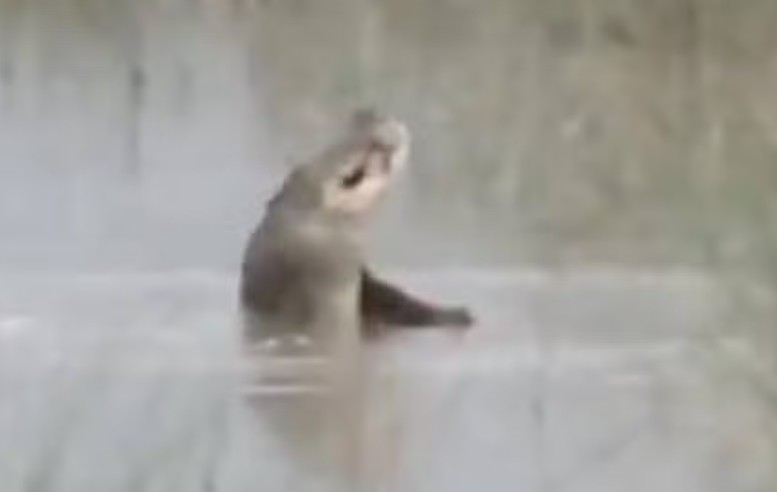
Horrified villagers watched helplessly as a 12-year-old boy was dragged into a river by a crocodile in a devastating attack in northern India.
Sunil Singh was seized Thursday afternoon at the Ghaghra River in the Bahraich district of Uttar Pradesh, according to local authorities.
The sixth-grader had been helping his uncle plant rice in a nearby field and stopped at the riverbank to wash his hands and feet before heading home. Without warning, a crocodile lunged from the water and grabbed him near the shoreline.
Sunil’s uncle, Vijay Raj Singh, immediately raised the alarm, sending nearby villagers racing toward the river.
Witnesses desperately threw rocks, bricks and sticks at the crocodile in an attempt to force it to release the boy. Despite their frantic efforts, the reptile refused to let go.
The crocodile repeatedly rolled through the water while dragging Sunil beneath the surface before disappearing with him into a deeper section of the river.
Villagers then spent approximately five hours searching the water with long bamboo poles. Sunil’s body was eventually recovered.
Authorities said part of his abdomen and one of his legs had been bitten off during the attack.
Station House Officer T. N. Maurya confirmed the incident and said disturbing footage showing the attack had circulated online. Sunil’s body was sent for an autopsy Friday morning.
Local media reported that Sunil was the only boy in a family that included three sisters. His parents had reportedly died several years earlier.
Crocodile attacks are believed to kill roughly 1,000 people around the world each year, although obtaining an exact number can be difficult because many incidents occur in remote areas.
Fatal crocodile attacks are relatively rare in the United States. Most are reported in regions of Africa and Asia where people regularly live or work near waterways inhabited by the reptiles.
A 2017 Cambridge University study found that crocodile attacks were more likely to happen during daylight hours than at night. Researchers said the pattern may be linked to people working, bathing or collecting water near rivers during the day, giving crocodiles more opportunities to strike.
Discover more from True News Media
Subscribe to get the latest posts sent to your email.