

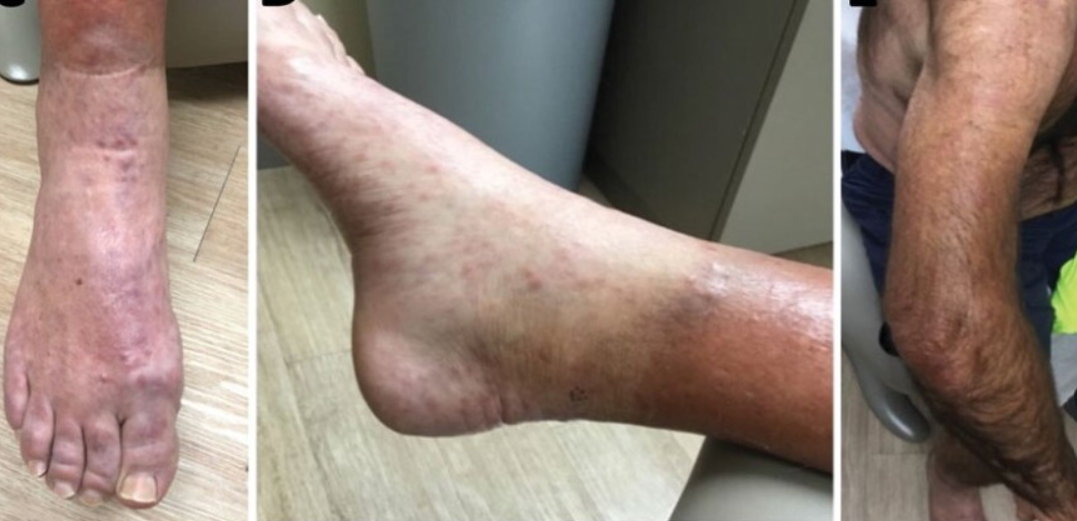
A rare disease dating back thousands of years is continuing to surface in Florida, with two more cases reported in the latest health update.
Hansen’s disease, better known as leprosy, has now been reported in 25 Florida residents in 2026, according to state health figures released October 15.
The latest cases involve a person between 75 and 79 years old in Orange County and another between 80 and 84 in Polk County.
The new diagnoses come after Florida recorded 36 cases in 2025, its highest annual total in the state’s modern disease surveillance records.
Although leprosy is extremely rare in the United States, Florida has emerged as one of the country’s leading areas for reported infections.
The disease, often associated with biblical times, is caused by slow-growing bacteria that can attack the skin, nerves, eyes and lining of the nose.
Without treatment, infections can lead to permanent nerve damage, loss of sensation, muscle weakness and serious complications affecting the hands and feet.
However, health officials stress that Hansen’s disease is treatable and curable, particularly when diagnosed early.
According to the Centers for Disease Control and Prevention, approximately 95% of people have natural immunity to the bacteria responsible for leprosy.
The disease is also difficult to spread. Unlike common respiratory illnesses, it generally requires prolonged, close contact with someone who has an untreated infection.
Simply shaking hands, sitting next to an infected person or sharing a brief conversation does not transmit the disease.
So why are cases continuing to appear in Florida?
Researchers believe the state’s large population of nine-banded armadillos may help explain some infections.
These animals, commonly spotted in Florida neighborhoods, wooded areas and along roadsides, can naturally carry the bacteria responsible for Hansen’s disease.
Scientific studies have linked infected armadillos to human cases in the southern United States, although the risk of transmission remains very low.
Researchers are also investigating whether contaminated soil and other environmental exposures could contribute to infections.
The exact source of many Florida cases remains uncertain.
The state’s recent infections have been reported across numerous counties, including Brevard, Charlotte, Duval, Hillsborough, Lake, Lee, Manatee, Miami-Dade, Okeechobee, Orange, Pasco, Polk, Seminole, St. Johns, Sumter and Volusia.
Central Florida has attracted particular attention because of clusters of cases near the Interstate 4 corridor.
Historically, Florida averaged approximately six cases annually from 1992 through 2014. That number rose substantially in subsequent years, including 29 cases in 2015.
The state’s 36 cases in 2025 accounted for more than one-fifth of the 174 cases reported nationwide that year.
Despite the concerning numbers, public health officials have not issued a general travel warning advising Americans to avoid Florida because of leprosy.
Rumors earlier this year suggested that the CDC had issued such an advisory, but those claims were false.
Health experts instead recommend understanding the symptoms and seeking medical attention when unexplained changes persist.
Early warning signs can include patches of skin that appear lighter or darker than surrounding areas, numbness, tingling, muscle weakness and a reduced ability to feel pain or temperature.
One challenge is that symptoms may not develop until years after exposure. In some cases, the disease can remain unnoticed for as long as 20 years.
Doctors can confirm an infection through medical examinations and specialized testing, including skin biopsies.
Treatment typically involves a combination of antibiotics taken for one to two years, depending on the severity of the infection.
The CDC emphasizes that people receiving appropriate treatment can continue living normal lives without posing a risk through everyday social contact.
For Florida residents, experts recommend avoiding unnecessary handling of wild armadillos and taking basic precautions when working outdoors.
While the latest cases have renewed attention on a disease many Americans thought belonged to the distant past, health officials emphasize that the likelihood of infection remains very low.
The important message is that leprosy has not disappeared, but modern medicine has made it a curable disease rather than the feared illness it once was.
Discover more from
Subscribe to get the latest posts sent to your email.
This is all happening because of the illegals coming from 3rd world Countries. Thanks to Obama and Biden