

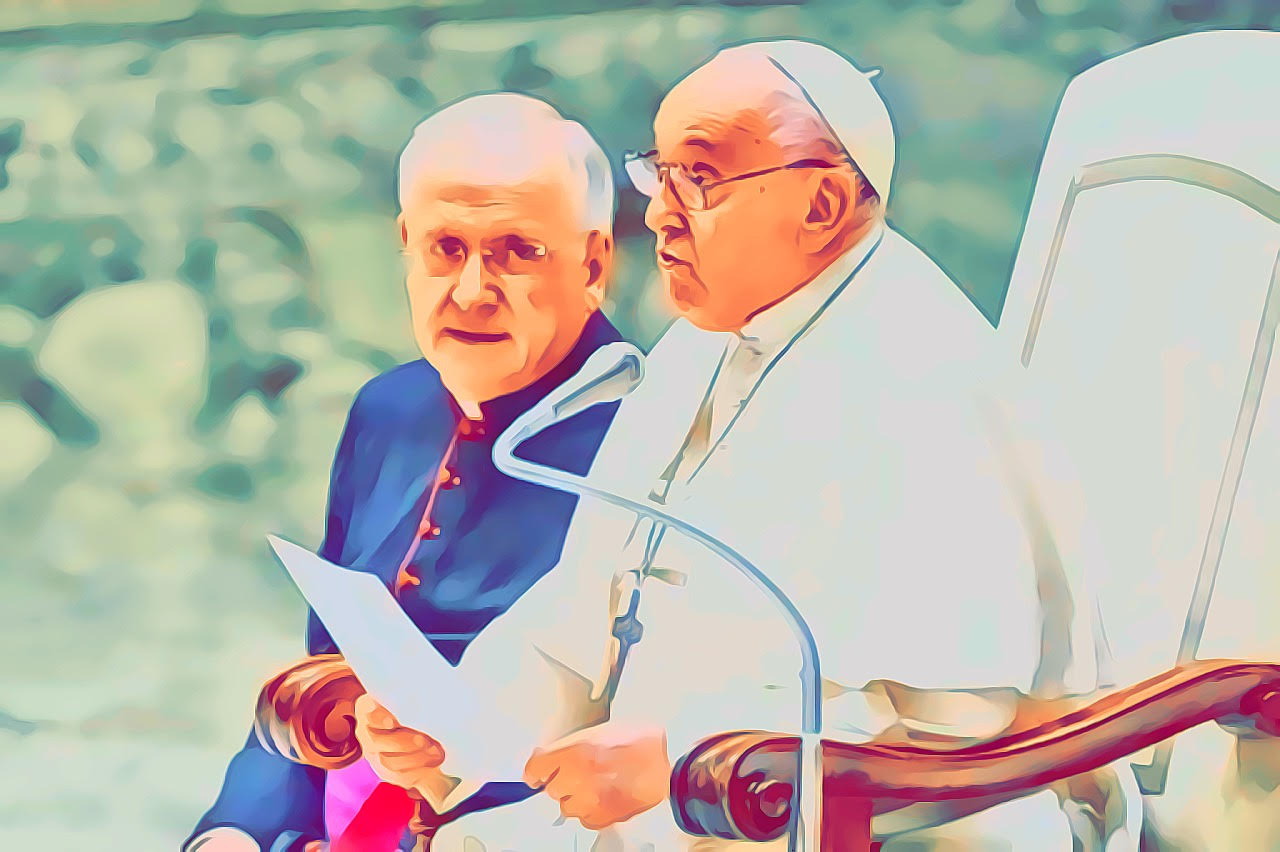
In the grand chambers of the Vatican, a document has emerged that boldly challenges the prevailing winds of modernity. It’s called Dignitas Infinita, a Latin term that encapsulates the profound belief in the infinite dignity of every human being. Released by the Dicastery for the Doctrine of the Faith (DDF), this monumental work is not just a proclamation; it’s a manifesto for human dignity in a world often adrift in moral confusion.
From the outset, Dignitas Infinita sets the stage by affirming the timeless truth that humans are created in the image and likeness of God. In a society where identity is increasingly fragmented and deconstructed, this reaffirmation of inherent dignity is nothing short of revolutionary.
But Dignitas Infinita doesn’t stop there. It delves into the heart of contemporary moral debates with a fearlessness that is quintessentially Catholic. From abortion to euthanasia, poverty to the death penalty, the document leaves no stone unturned in its defense of human dignity at every stage of life.
Yet, it’s the document’s uncompromising stance on gender theory that is perhaps its most provocative aspect. In unequivocal terms, the Catholic Church declares gender theory an affront to the divine order. Attempting to alter one’s immutable gender, it argues, is nothing short of hubris—a futile attempt to play God in defiance of the natural order.
As Pope Francis himself has lamented, gender ideology represents one of the world’s most dangerous ideological colonizations. In the face of such encroachments on human dignity, Dignitas Infinita stands as a bulwark of resistance—a clarion call to return to the fundamental truths that have guided humanity for millennia.
But the document doesn’t merely condemn; it also illuminates the beauty of sexual difference—a foundational aspect of human existence that is both marvelous and powerful. In the complementary dance of male and female, Dignitas Infinita finds not just difference, but divine harmony—a harmony that is too often obscured in the cacophony of modern life.
In addressing the practice of surrogacy, the document once again champions the dignity of the child—a dignity that begins at conception and extends throughout every stage of life. Surrogacy, it argues, reduces the immensely worthy child to a mere object—an object whose origin is artificially induced and whose dignity is too often ignored.
Dignitas Infinita is not just a doctrinal treatise; it’s a moral compass for a world adrift in moral relativism. It challenges us to see beyond the surface of contemporary debates and to recognize the profound dignity that resides in every human soul. And as we navigate the complexities of our time, may we heed its call to preserve, protect, and defend the infinite dignity of every human being, from conception to natural death.
Discover more from
Subscribe to get the latest posts sent to your email.
Finally the pope lives up to what the Bible says. He has so disappointed most catholics in other rulings.