

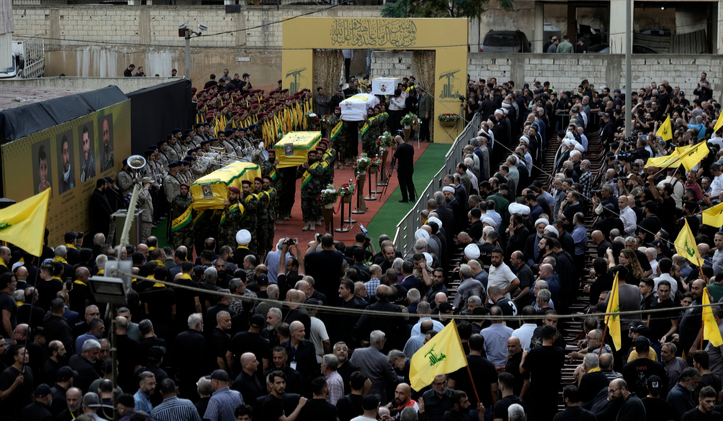
A second wave of blasts hit Hezbollah on Wednesday, leaving Lebanon rattled and questioning what’s really going on. Security sources report that radios and other communication devices used by the terror group were detonated across the country, resulting in at least nine dead and over 300 wounded. This follows Tuesday’s massive security breach, which saw Hezbollah pagers explode, claiming at least 12 lives and injuring another 2,800.
According to sources, the explosions targeted thousands of personal walkie-talkie radios that Hezbollah ordered five months ago—the same time the now-deadly pagers were procured. This indicates a coordinated effort to dismantle Hezbollah’s communication infrastructure, which has raised tensions and triggered more chaos in the already volatile region.
Even more troubling, additional explosions erupted in Beirut and southern Lebanon on Wednesday. State media reported that solar energy systems also detonated, injuring at least one girl. The situation turned even more ominous when one of these blasts occurred near a funeral organized by Hezbollah for victims of the first wave of explosions. While Hezbollah has been quick to point fingers at Israel, there are still many unanswered questions about who or what is behind these attacks.
Civilians have not been spared from this wave of destruction. Health officials have confirmed that among the dead are two children, further adding to the tragedy of this event. Although officials are still investigating and have not confirmed all the devices involved in Wednesday’s attacks, the scale of the operation seems to be much larger than initially thought.
A High-Tech Attack
Tuesday’s initial blast centered around the detonation of AR-924 pagers—recent models that Hezbollah had acquired five months ago. Gold Apollo, a Taiwanese company, admitted that they had authorized the use of their brand on these pagers, though the devices were allegedly manufactured in Budapest. However, Hungary denies these allegations, stating that there is no manufacturing facility for such devices in the country. “The referenced devices have never been in Hungary,” said government spokesman Zoltan Kovacs, dismissing claims that the pagers originated from Hungarian soil.
According to reports from the New York Times, Israel allegedly embedded explosive material in these Taiwan-made pagers before they were shipped to Lebanon. The material was supposedly hidden next to the battery and could be remotely detonated. On Tuesday, these devices were activated through a message that impersonated the group’s leaders, turning Hezbollah’s own communication tools into lethal weapons.
The Aftermath and Retaliation
In response to Tuesday’s explosions, Hezbollah vowed revenge against Israel, accusing it of orchestrating the blasts. The group fired a 10-rocket barrage into northern Israel, hitting open areas but not causing significant damage. The Iran-backed terror group has promised “harsh punishment” in retaliation for what it has termed a “massacre.”
“The resistance will continue today, like any other day,” Hezbollah’s statement declared, signaling its intent to support Gaza while also plotting retaliation against Israel. Top Hezbollah official Hashim Safi Al Din issued an even grimmer warning, hinting at a uniquely brutal form of retribution. “These attacks will certainly be uniquely punished; there will be a bloodily unique revenge,” he declared.
As Hezbollah grapples with this unexpected and devastating attack on its operations, its leader Hassan Nasrallah is expected to address the situation publicly. Meanwhile, the region is on high alert, as this sequence of events has added yet another layer of tension to an already fragile geopolitical landscape.
The Bigger Picture
So, what’s really happening here? For Hezbollah to be hit in such a targeted and devastating way suggests that someone has been closely monitoring their operations. If Israel is indeed behind this, as Hezbollah claims, it raises questions about the extent of Israeli intelligence capabilities and its willingness to strike preemptively. The coordination and timing of these attacks indicate a high level of sophistication.
At the same time, it’s clear that civilians are being caught in the crossfire of this high-stakes game. With children among the dead and scores injured, Lebanon faces a potential humanitarian crisis on top of its political and economic turmoil. One thing is certain: this is not the end. The region is bracing for further escalation as Hezbollah vows revenge and Israel remains on guard.
What’s your take on this? Will Hezbollah follow through on its threats? Or is this the beginning of a broader conflict that could spiral out of control?
Discover more from
Subscribe to get the latest posts sent to your email.
Those Iran backed terrorists are getting what they deserve. They started that mess.