

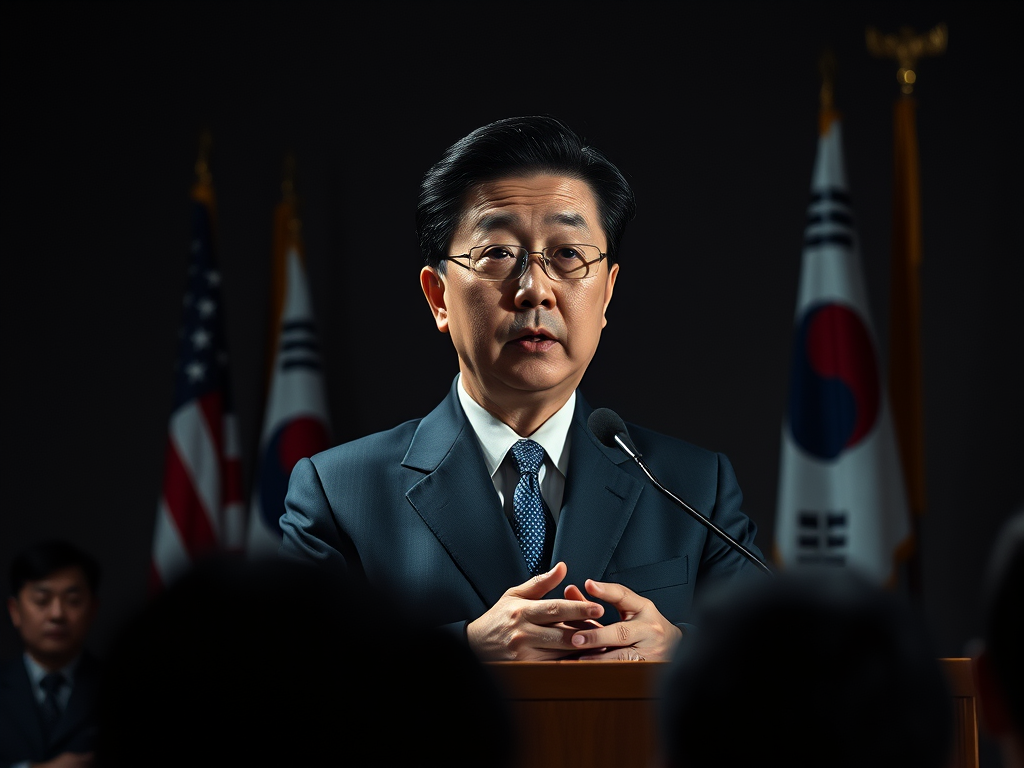
In an unprecedented late-night address Tuesday, South Korean President Yoon Suk Yeol shocked his nation by declaring martial law. Citing an alleged need to protect the country from “shameless pro-North Korean anti-state forces,” Yoon announced a sweeping crackdown not on external threats, but on his own domestic political opposition.
The announcement, broadcast live on YTN television, plunged South Korea into uncertainty and sent the Korean won plummeting against the U.S. dollar. This abrupt declaration has thrown one of Asia’s most stable democracies into turmoil, raising questions about the country’s democratic future.
A Sudden Lurch Toward Authoritarianism?
President Yoon’s declaration harkens back to South Korea’s dark past, when authoritarian regimes ruled the nation before its democratic transformation in the 1980s. Yet Yoon defended his actions as necessary to preserve constitutional order, accusing opposition lawmakers of undermining government functions.
“I declare martial law to protect the free Republic of Korea from the threat of North Korean Communist forces,” Yoon said, claiming his domestic adversaries were jeopardizing the nation. “To eradicate the despicable pro-North Korean anti-state forces that are plundering the freedom and happiness of our people, and to protect the free constitutional order.”
Opposition Outrage
Yoon’s political adversaries immediately denounced the move. Lee Jae-myung, leader of the opposition Democratic Party (DP), issued a scathing response, warning of dire consequences.
“Tanks, armored personnel carriers, and soldiers with guns and knives will rule the country,” Lee said in an online broadcast. “The economy of the Republic of Korea will collapse irretrievably. My fellow citizens, please come to the National Assembly.”
Reports from Yonhap news agency indicated that the parliament building’s entrances were blocked, further escalating tensions.
Backdrop of Political Strife
The martial law declaration comes after a week of fierce political clashes. Yoon targeted the DP for proposing to impeach key prosecutors and rejecting his government’s budget proposal, which included cutting over 4 trillion won ($2.8 billion). Yoon argued these actions paralyzed the government’s ability to function.
South Korea’s ministers had already voiced outrage at the DP’s budget cuts, claiming they undermined the administration’s core operations. Yoon’s decision appears to be a direct response to what he sees as legislative sabotage, but his actions have left many questioning his commitment to democratic principles.
International Reactions and Economic Fallout
The international community has remained largely silent for now. The White House has yet to issue a statement, despite the crisis unfolding in a key U.S. ally. Meanwhile, South Korea’s economy faces mounting instability, with the won’s value plunging amid fears of long-term chaos.
Yoon’s declaration of martial law marks a turning point for South Korea, a nation long seen as a beacon of democracy in East Asia. Whether this crisis ends with restored order or the erosion of freedoms remains to be seen.
One thing is certain: the eyes of the world are now fixed on Seoul, as South Korea’s political future hangs in the balance.
Discover more from
Subscribe to get the latest posts sent to your email.