

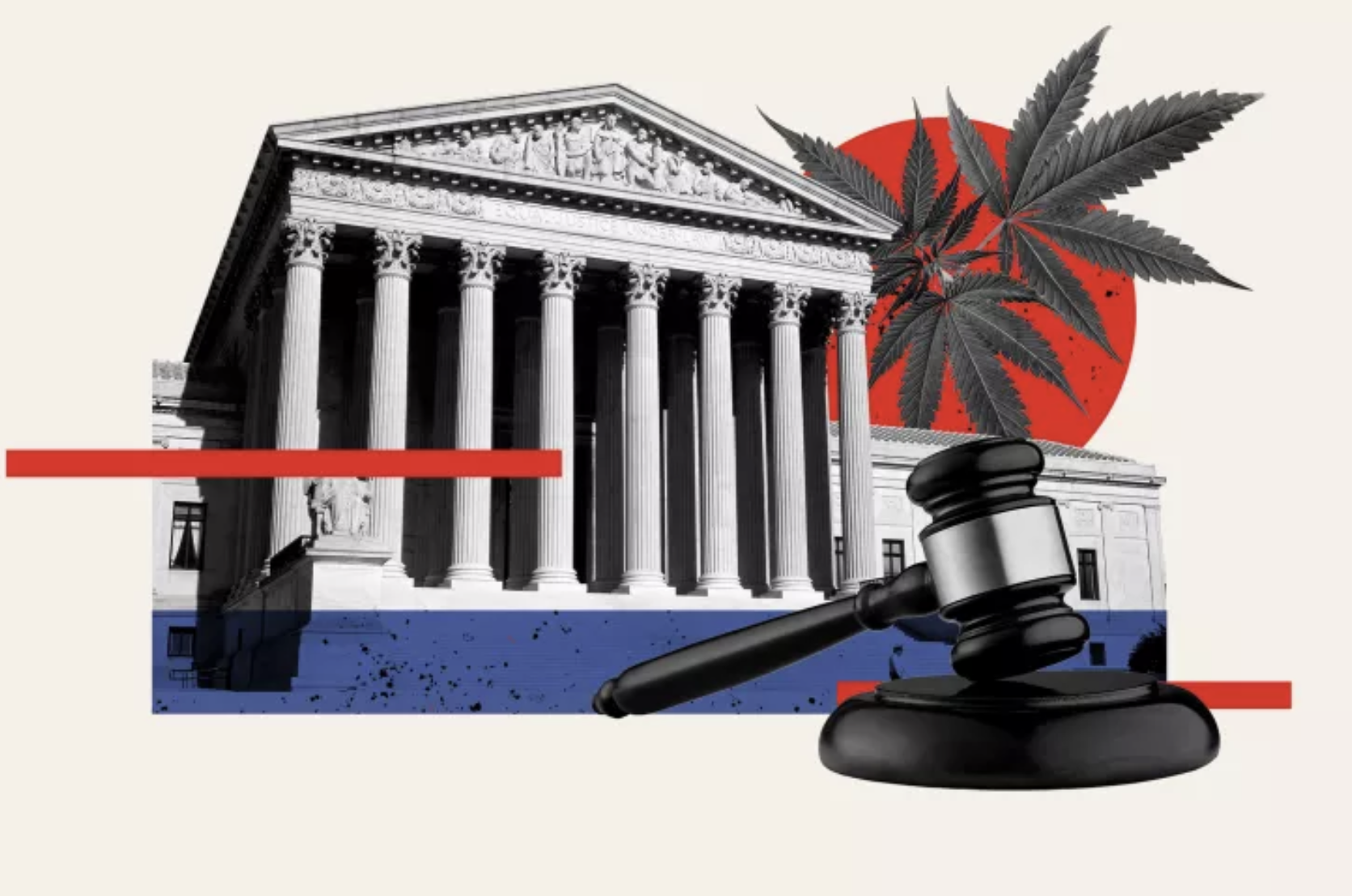
The U.S. Supreme Court is preparing to tackle two explosive cases that could reshape the legal landscape for millions of Americans who use marijuana — and own firearms.
At the heart of the controversy: the clash between federal drug laws, state legalization efforts, and constitutional rights. With marijuana still classified as a Schedule I controlled substance under federal law, conflicts are mounting as dozens of states have legalized cannabis for medical or recreational use.
President Donald Trump recently signaled openness to reclassifying marijuana as a less dangerous drug, but until Congress acts, the Supreme Court’s decisions could dramatically alter the balance between federal authority and personal freedom.
The Two Cases That Could Change Everything
U.S. v. Hemani
This case tests whether Americans who legally use marijuana under state law can still exercise their Second Amendment rights.
Ali Danial Hemani, a Texas man, was prosecuted after the FBI discovered a firearm in his home while alleging he was a “regular user” of marijuana. His attorneys argue he wasn’t intoxicated and that federal law unfairly criminalizes millions of lawful cannabis users who own guns.
“If the government wins, it sets a dangerous precedent,” warned Hemani’s attorney, Zachary Newland. “Under this interpretation, a grandmother using medical marijuana for glaucoma could face 15 years in federal prison simply for owning a firearm.”
The Fifth Circuit Court of Appeals sided with Hemani, ruling that disarming sober individuals based solely on past marijuana use violates constitutional protections. But the Department of Justice has appealed, asking the Supreme Court to restore the prohibition.
Former federal prosecutor Neama Rahmani told us the ruling could be historic:
“This is where gun rights and outdated marijuana laws collide. The justices have been strongly pro-Second Amendment — but will they extend those rights to cannabis users? That’s the million-dollar question.”
Canna Provisions v. Bondi
In the second case, several Massachusetts cannabis businesses are challenging the Controlled Substances Act, arguing that Congress has no authority to criminalize marijuana grown, sold, and consumed entirely within a state where it’s legal.
The plaintiffs argue that the Court’s 2005 decision in Gonzales v. Raich, which upheld federal power to regulate intrastate cannabis, is now obsolete given the booming state-regulated cannabis industry.
Their petition bluntly claims:
“Congress is criminalizing an activity that is purely local, distinguishable from interstate marijuana, and reducing interstate trafficking. The assumptions behind Raich no longer hold.”
Legal analysts warn, however, that overturning Raich would upend decades of federal drug policy and ignite a national clash between state sovereignty and federal supremacy.
What’s at Stake
These cases strike at the intersection of marijuana legalization, gun rights, and states’ rights — three deeply divisive issues in American politics.
- Gun Owners: Millions of cannabis users who legally own firearms under state laws could be at risk of felony charges if the DOJ prevails.
- Marijuana Industry: The Canna Provisions challenge could dismantle federal restrictions and open the door for broader legalization — or cement federal power to override state laws.
- Trump Administration’s Role: While President Trump has hinted at reclassification, his DOJ continues to push for strict enforcement, leaving the administration internally divided on cannabis policy.
Expert Predictions
Some analysts believe the conservative majority on the Court will side with the DOJ on federal supremacy, while others think the justices’ strong pro-gun record may tilt U.S. v. Hemani in favor of cannabis users.
“This Court doesn’t like conflicting laws between states and Washington,” Rahmani noted. “But it also doesn’t like trampling on the Second Amendment. Expect fireworks.”
What Happens Next
The Supreme Court’s new term begins October 6, and these cases are expected to headline the docket. A ruling could come as early as spring 2026, but its ripple effects would be immediate — potentially redefining cannabis regulation, gun ownership, and federal power across America.
Until then, millions of marijuana users and gun owners are living in legal limbo.
Do you want me to also craft a viral, sensational headline and subhead to make this piece really pop for your audience? It’ll make it more clickable and shareable.
Discover more from True News Media
Subscribe to get the latest posts sent to your email.
Canada passed a marijuana law and really I think that was bad