

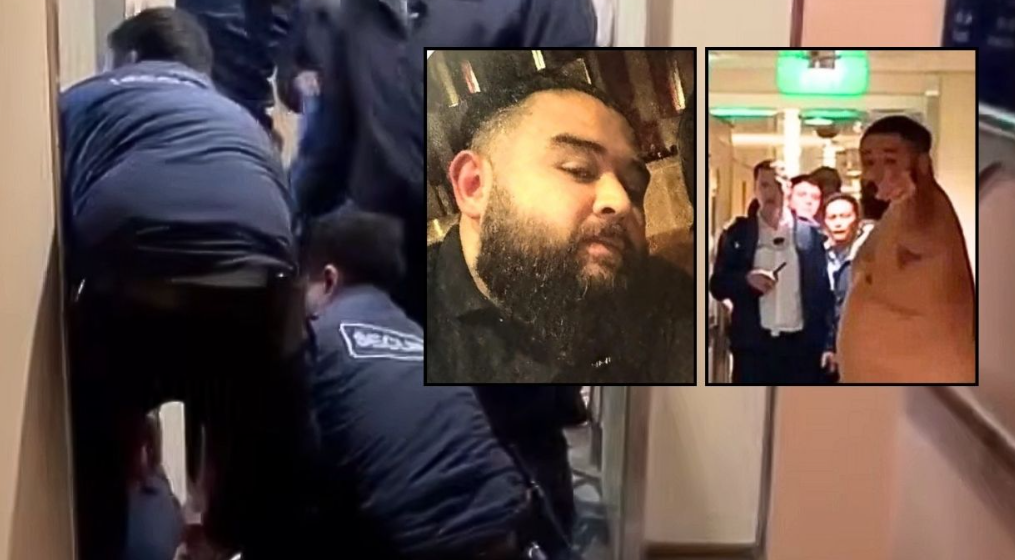
Royal Caribbean has agreed to settle a wrongful-death lawsuit filed by the family of a California man who died aboard one of its cruise ships after allegedly being served at least 33 alcoholic drinks before a violent confrontation with security.
Michael Virgil, 35, died aboard the Navigator of the Seas on Dec. 13, 2024, the same day he boarded the ship in Los Angeles for a four-day cruise to Ensenada, Mexico.
His fiancée, Connie Aguilar, later sued Royal Caribbean in federal court in Florida, accusing the cruise line of negligently overserving Virgil alcohol and using excessive force while trying to restrain him.
The case has now been settled.
The financial terms have not been publicly disclosed.
Because part of the settlement involves Virgil’s young son, a federal judge appointed a guardian ad litem to independently review whether the agreement protected the child’s interests.
Court records show Royal Caribbean notified the U.S. District Court for the Southern District of Florida in January that a settlement had been reached. The court then administratively closed the case while the minor’s portion of the agreement was reviewed.
The lawsuit had painted a disturbing picture of Virgil’s final hours.
Virgil boarded the Navigator of the Seas with Aguilar and their son in San Pedro, California.
According to the complaint, their cabin was not yet available, so the family was directed toward one of the ship’s bar areas.
Virgil had purchased Royal Caribbean’s Deluxe Beverage Package, which allows guests to order alcoholic drinks throughout the cruise subject to the company’s service rules.
The lawsuit alleged crew members served Virgil at least 33 alcoholic beverages despite what his family described as increasingly obvious signs of intoxication.
The complaint accused Royal Caribbean employees of continuing to serve him even when they knew or should have known he was severely impaired.
Royal Caribbean previously declined to address the specific allegations while the lawsuit was pending, saying only that it was saddened by Virgil’s death and had cooperated with authorities.
What happened later that evening became the central focus of the case.
Virgil reportedly became disoriented while trying to locate his cabin.
An FBI investigator later described him as belligerent and said he had been banging and kicking doors and making threats toward staff and passengers, according to reporting based on the coroner’s investigation.
Video from the ship also showed Virgil acting erratically before security intervened.
The lawsuit alleged security officers tackled Virgil, forced him facedown and restrained him with their body weight.
His hands were reportedly cuffed and his legs secured with zip ties.
Crew members also allegedly used pepper spray and administered the sedative haloperidol at the request of the ship’s staff captain.
According to the family’s complaint, Virgil was held prone while pressure was applied to his body, restricting his ability to breathe.
The lawsuit alleged the prolonged restraint led to hypoxia, respiratory failure, cardiovascular instability and eventually cardiopulmonary arrest.
Virgil died while still in the care of the ship’s crew.
The Los Angeles County Medical Examiner later classified his manner of death as homicide.
His cause of death was listed as the combined effects of mechanical asphyxia, obesity, cardiomegaly — an enlarged heart — and ethanol intoxication.
A medical examiner’s homicide classification does not necessarily mean a crime occurred. It means another person’s actions contributed to the death; criminal responsibility is a separate determination.
Virgil’s medical findings also showed he had health conditions that may have made a physical struggle especially dangerous.
His enlarged heart and obesity were identified as contributing factors, while his alcohol intoxication could also have further compromised his breathing during the restraint.
His family’s lawsuit argued, however, that the chain of events should never have reached that point.
Aguilar accused Royal Caribbean of failing to stop serving Virgil alcohol when his intoxication became obvious and then improperly handling the resulting confrontation.
The complaint sought damages for wrongful death and other losses on behalf of Virgil’s estate and surviving family members.
The settlement ends the civil fight without a trial or a jury determination that Royal Caribbean was legally responsible for Virgil’s death.
No public settlement amount has been disclosed.
For Virgil’s family, however, the agreement brings an end to a lawsuit that raised difficult questions about alcohol service aboard cruise ships and how security teams handle severely intoxicated passengers.
Virgil left behind his fiancée and young son.
Discover more from
Subscribe to get the latest posts sent to your email.