

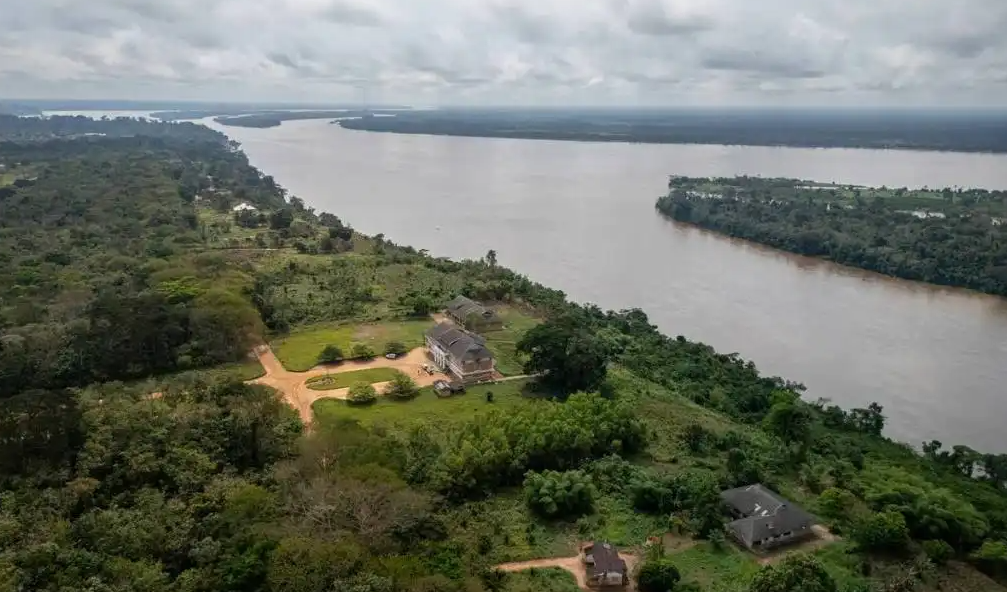
At least 30 people are dead and dozens more remain missing after two passenger boats collided on the Congo River in the Democratic Republic of Congo.
The deadly crash happened Sunday evening near the Ngombe-Lukolela area in Equateur province, in the northwestern part of the country.
Both vessels were motorized wooden boats carrying passengers and goods.
One boat was traveling from the Ubangi region toward Kinshasa, the country’s capital, while the other was headed from Kinshasa toward Lukolela.
The two vessels collided near Lukolela under circumstances that remain under investigation.
Provincial Interior Minister Crispin Mputu said at least 30 people were killed.
Those victims had already been buried by Monday.
Dozens of other passengers remained unaccounted for as search crews continued looking for survivors and additional victims.
One member of the security forces who said he witnessed the collision from the riverbank claimed the boat traveling from Ubangi appeared overloaded with goods.
According to the witness, the vessel collided with the boat coming from Kinshasa and sank.
“Almost all the passengers on board were trapped underwater,” the witness said.
Authorities have not officially confirmed overloading as the cause of the crash.
Mputu said investigators were still working to determine exactly what led to the collision.
He also noted that traveling on rivers at night has contributed to numerous deadly accidents in the country.
Boat travel remains essential across large parts of the Democratic Republic of Congo because many remote communities have limited road access.
That dependence on river transportation has also contributed to repeated disasters involving overloaded wooden boats, poor safety standards and nighttime travel.
Life jackets and other safety equipment are often limited or unavailable on vessels operating in isolated regions.
The Congo River itself is one of Africa’s largest and most heavily traveled waterways.
For many communities, boats are one of the only practical ways to move between towns and cities.
But accidents can quickly become deadly because rescue crews may be far away and many passengers do not know how to swim.
Sunday’s collision comes just months after another deadly boating disaster in the country.
In July, at least 20 people were killed when a wooden boat carrying students returning from state exams sank in Kasai province.
That vessel went down while entering the area where the Sankuru and Kasai rivers meet.
Discover more from
Subscribe to get the latest posts sent to your email.