

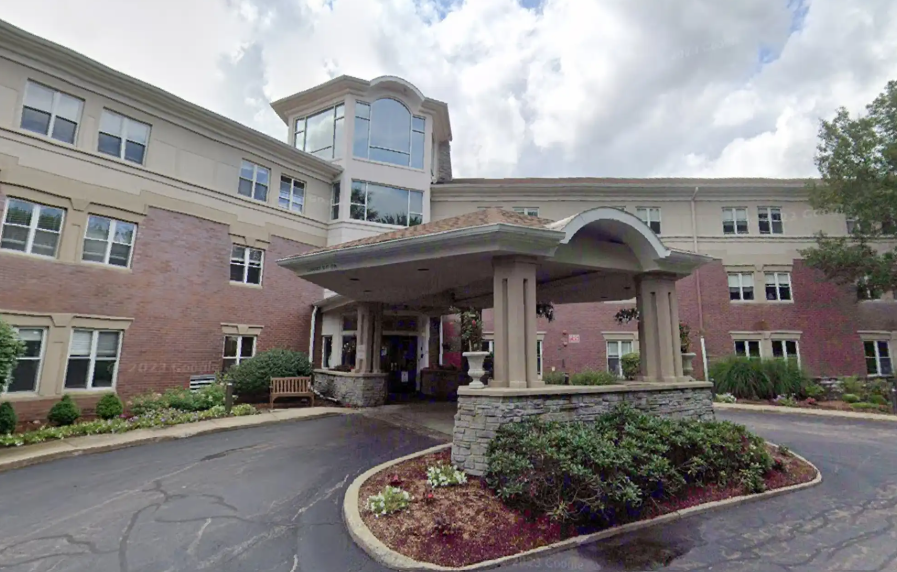
An 86-year-old Massachusetts woman was found dead inside her assisted living apartment, where emergency responders discovered sweltering conditions and a thermostat reading an alarming 99 degrees.
Now, authorities are investigating whether problems with the building’s heating system may have played a role in her death.
Sheila Ann Szczypinski was discovered unresponsive in her bed at Golden Pond Assisted Living & Memory Care in Hopkinton, Massachusetts, on September 30, just weeks after moving into the facility.
According to a police report, an aide entered Szczypinski’s apartment to provide scheduled bathing assistance and found her unresponsive. Emergency crews were called shortly before 10 a.m.
When firefighters and police arrived, they immediately noticed the overwhelming heat inside the apartment.
Officers described the room as extremely hot, while firefighters opened windows to help circulate air.
A member of the fire department reported that the thermostat displayed 99 degrees Fahrenheit, raising immediate concerns about the conditions Szczypinski had been exposed to before her death.
Investigators learned that the facility had switched its central system from air conditioning to heating the previous day.
According to the police report, the building’s facilities manager initially told investigators that no other apartments were experiencing similar heating problems.
The manager suggested Szczypinski might have attempted to cool her apartment using the thermostat, unknowingly causing warm air to continue circulating.
Her son also told investigators that his mother sometimes became confused and might have accidentally adjusted the thermostat to an unusually high setting.
However, additional information has raised questions about whether the excessive heat was isolated to her apartment.
CBS Boston reported that employees, speaking anonymously, described unusually high temperatures in multiple areas of the facility following the changeover to heating.
Some employees claimed conditions were so uncomfortable that residents had to be moved into common areas where portable air conditioners and fans were available.
The concerns reportedly continued after Szczypinski’s death.
Hopkinton Police Chief Scott van Raalten confirmed that officers returned to Golden Pond on October 1 for an unrelated medical call. During that visit, an officer noticed unusually high temperatures in rooms and other areas of the building.
The officer also reported that the heating and cooling system had not been repaired, prompting notification of local and state authorities for further investigation.
Despite those accounts, Golden Pond has maintained that its heating and cooling equipment was operating properly when Szczypinski died.
Douglas Noble, the facility’s director of operations, said the community was cooperating with regulatory agencies investigating the death.
He explained that the building’s HVAC equipment receives professional maintenance and that residents have individual thermostats in their apartments.
Noble also said residents are encouraged to contact staff through their call buttons whenever they need help adjusting room temperatures.
The conflicting accounts have become an important part of the investigation, particularly as officials work to establish whether the overheating resulted from an individual thermostat setting, a broader mechanical issue or another cause.
Szczypinski had been living at Golden Pond for approximately seven weeks.
She occupied an independent-care apartment, where she managed her own medication and could decide whether to participate in meals and activities. Staff periodically visited to provide assistance with personal care.
The day before her death, Szczypinski had reportedly participated in activities and joined a supervised shopping trip to Walmart.
Employees told investigators they had not noticed obvious signs of illness beforehand.
Those details have added to questions surrounding her unexpected death, although authorities have not determined whether the temperature inside her apartment was responsible.
The Middlesex District Attorney’s Office and Massachusetts Office of the Chief Medical Examiner are investigating. As of October 9, officials had not publicly established a definitive cause of death.
Medical experts recognize that older adults can be especially vulnerable to extreme heat because aging can affect the body’s ability to regulate temperature. Certain medications and underlying medical conditions can also increase the risk of heat-related illness.
However, the presence of extreme heat does not establish that Szczypinski died from heat exposure. Investigators will need to consider medical findings, the condition of the apartment and other available evidence before reaching a conclusion.
Beyond the troubling circumstances of her death, Szczypinski’s family is remembering a devoted mother, friend and hardworking woman who enjoyed spending time with the people she loved.
Born in Lowell, Massachusetts, she graduated from Lowell High School in 1958.
Throughout her life, she held several jobs, including working at a cookie factory, waiting tables at a local Italian restaurant and serving as a personal banker in Pittsfield.
She later built a successful career in real estate in the Milford area before retiring from the business that eventually became Hammond Realty.
She was the mother of three and the widow of Francis J. Szczypinski, who died in 1996.
According to her obituary, Szczypinski enjoyed shopping, going out for dinner and sharing a glass of wine with friends. Above all, she treasured time spent with her family and closest companions.
Her death has also brought renewed attention to the responsibilities of assisted living facilities, particularly when residents may need help operating equipment or recognizing potentially dangerous conditions.
Unlike nursing homes, assisted living communities generally provide a residential setting with varying levels of assistance. Residents may retain considerable independence, depending on their individual needs and care arrangements.
The investigation will seek to determine what happened during Szczypinski’s final hours, whether the facility’s heating system was functioning correctly and whether any additional safety concerns contributed to the circumstances surrounding her death.
For now, her family is left grieving an unexpected loss as authorities continue searching for answers.
Discover more from
Subscribe to get the latest posts sent to your email.