

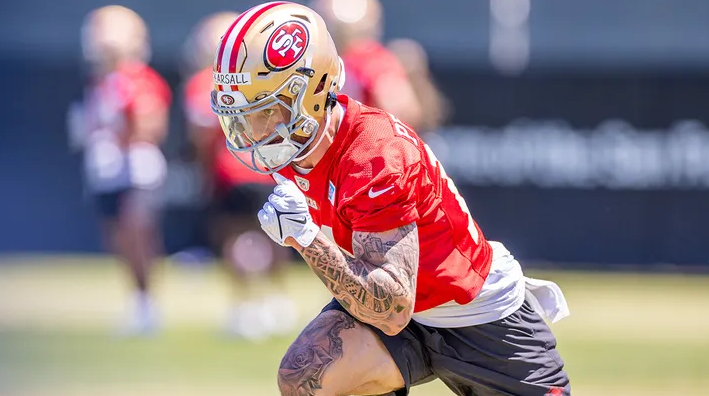
In yet another sign of the times, a 17-year-old suspect is accused of shooting San Francisco 49ers rookie wide receiver Ricky Pearsall in an alleged robbery attempt. And what are we hearing from the suspect’s attorney? The teen is “very sorry.” Well, forgive me if that doesn’t quite cut it. According to Deputy Public Defender Bob Dunlap, the suspect—a “young boy” from Tracy, California—feels “genuine, genuine remorse.” But let’s not lose sight of what’s really going on here: a 17-year-old, armed with a semiautomatic weapon, nearly took the life of a young NFL player over a Rolex watch.
This isn’t just another juvenile delinquent case. The suspect has been charged with attempted murder, assault with a semiautomatic weapon, and attempted second-degree robbery. San Francisco District Attorney Brooke Jenkins has added a slew of gun-related charges to the docket, making it clear that this was not some unfortunate accident but a calculated act of violence. And yet, we’re supposed to feel sorry for the shooter because, as his attorney says, he’s “just a young boy.” It’s exactly this kind of thinking that’s turning our streets into lawless battlegrounds.
Let’s talk about the real victim here: Ricky Pearsall, a promising young athlete who was simply going about his life. Drafted 31st overall in the first round by the San Francisco 49ers, Pearsall was shot through the chest, with the bullet exiting his back. Thankfully, it missed his vital organs, but this incident could have ended very differently. He was out of the hospital in less than 24 hours, a testament to his toughness, but also a grim reminder of the violent reality we now face on our streets.
The suspect’s attorney, Bob Dunlap, had plenty to say about his client’s remorse, but let’s not forget why we’re here in the first place. This isn’t about feelings; it’s about accountability. The DA’s office is still deciding whether to charge the suspect as an adult, which they should absolutely pursue. In California, charging a minor as an adult isn’t a given—it requires judicial approval. But let’s be clear: this was not the impulsive mistake of a naïve teenager. This was a violent, premeditated crime, and it needs to be treated as such.
Judge Roger C. Chan decided that the suspect will remain in San Francisco custody, despite a probation officer recommending he be transferred to his home county of San Joaquin, where he has another matter pending. And there it is again—the pattern of soft-on-crime decisions that we’ve seen all too often. A young man allegedly shoots an NFL player, and yet there’s talk of moving him closer to home as if this is some minor inconvenience. What happened to making our streets safe? What happened to holding criminals accountable, no matter their age?
And here’s the kicker: while Ricky Pearsall recovers and misses the first four weeks of the season, the teen suspect sits in custody, surrounded by a system that seems more concerned with his rehabilitation than with justice for the victim. We’re living in a society where a man can nearly lose his life over a luxury watch, and the conversation still circles back to the perpetrator’s feelings.
Let’s get one thing straight: it doesn’t matter if the shooter is 17 or 37. If you commit adult crimes, you should face adult consequences. This incident wasn’t just a close call for Ricky Pearsall; it was a wake-up call for all of us. The safety of our communities and the accountability of those who threaten it should be non-negotiable. If we continue to coddle criminals and let violent offenders off easy, we’re going to see more stories like this one. And next time, we might not be so lucky.
Discover more from
Subscribe to get the latest posts sent to your email.
California is a den of snakes in charge of total corruption starting in the governor’s mansion. Why would anyone even think to spend time and money there.