

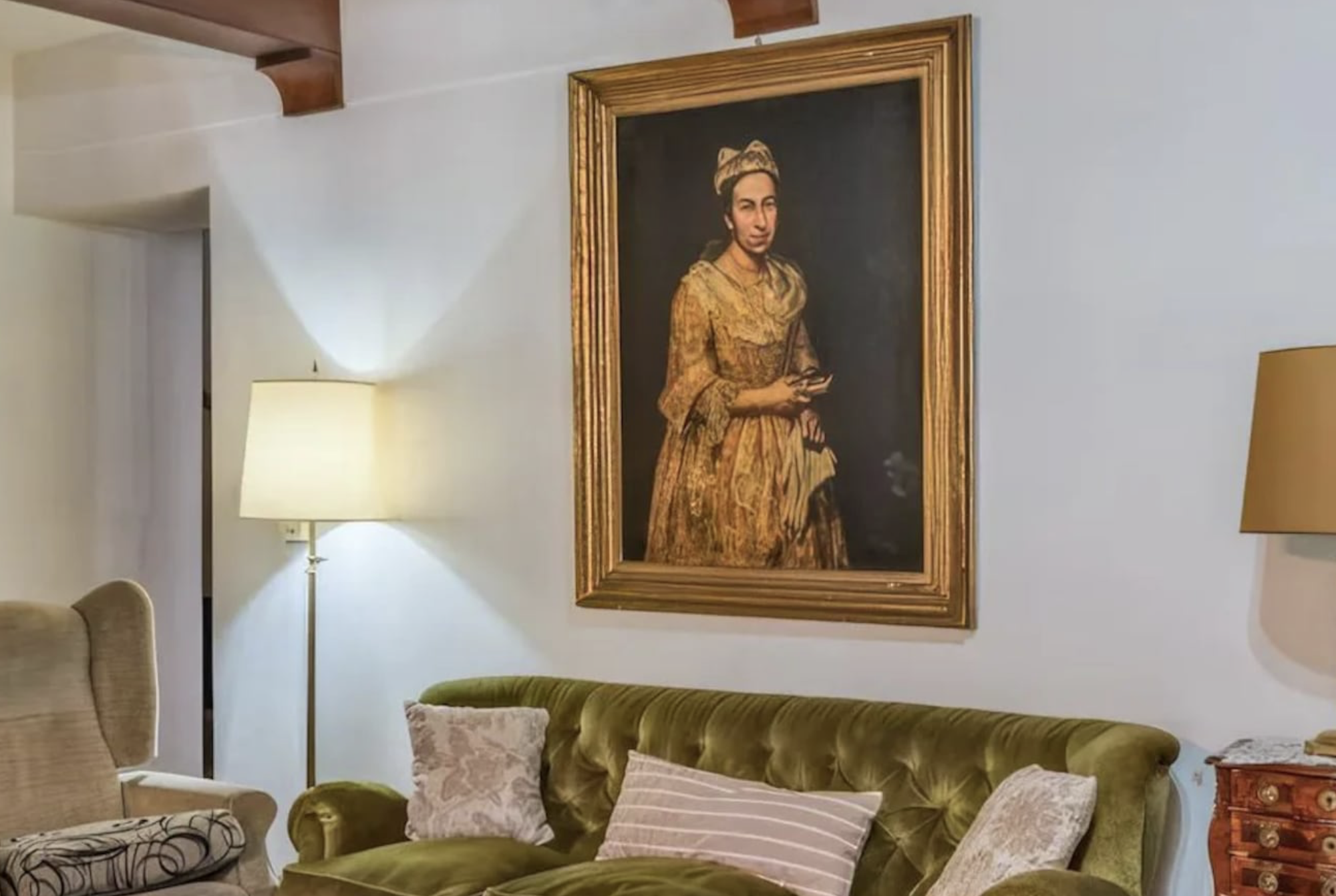
A decades-old Nazi mystery has reignited after Argentine authorities launched a sweeping investigation into a missing 17th-century masterpiece — allegedly stolen from a Dutch Jewish art dealer during World War II — spotted in a real estate ad before vanishing without a trace.
Interpol, Argentine federal police, and Dutch officials are now racing to recover the painting, believed to be “Portrait of a Lady” by Italian baroque artist Giuseppe Ghislandi (1655–1743), stolen from the legendary Amsterdam art dealer Jacques Goudstikker as the Nazis plundered Europe.
The drama began when Dutch newspaper AD recognized the rare Ghislandi work hanging on the wall of a home listed for sale in Mar del Plata, a quiet seaside city in Argentina. The property, investigators later revealed, once belonged to Friedrich Kadgien — a notorious Nazi financial adviser linked to Hermann Göring, Hitler’s right-hand man, and a man accused of hoarding looted art during the Holocaust.
Kadgien fled to Argentina after the fall of the Third Reich, joining hundreds of Nazi officials who built new lives there under false identities. He died in 1978, leaving behind a trove of wealth — and, prosecutors now believe, stolen masterpieces.
But by the time police entered the Mar del Plata property last week, the painting had vanished.
“All we found was a tapestry of a horse where the Ghislandi had been,” a source close to the investigation told Argentine newspaper La Nación. “It was like the artwork had been erased.”
Authorities have placed Kadgien’s daughter, Patricia Kadgien, and her husband, Juan Carlos Cortegoso, under house arrest. Prosecutors accuse the couple of hiding the painting after its discovery in the property listing triggered international outrage.
“They insist the artwork was inherited and belongs to them,” prosecutor Sergio López confirmed. “But until we locate the painting, this case remains wide open.”
Patricia’s lawyer, Carlos Murias, told a local newspaper the couple is “fully cooperating” with authorities — yet investigators say the Ghislandi has not been handed over.
Four property raids this week — including searches of three other homes linked to the Kadgien family — also failed to produce the missing portrait. However, police seized two 19th-century artworks from another Kadgien daughter’s home, suspecting they too may have been stolen during the Nazi occupation.
Jacques Goudstikker was one of Europe’s most influential art dealers before World War II, specializing in Italian and Dutch 16th- and 17th-century masters. When Nazi Germany invaded the Netherlands in 1940, Goudstikker fled but tragically died during his escape. His gallery, containing over 1,000 paintings, was seized by Nazi leaders — including Gestapo founder Hermann Göring, who cherry-picked pieces for his private collection.
Over the decades, Goudstikker’s heirs have fought to reclaim the stolen works. About 300 pieces were recovered after the war, including a 17th-century Dutch painting returned by the Getty Museum in Los Angeles in 2011. But hundreds remain missing, scattered in private collections and museums worldwide.
“This painting isn’t just art,” said Dutch lawyer and restitution expert Anneke van der Berg. “It’s part of a family’s stolen history. Every recovery is a piece of justice restored.”
Interpol has placed Portrait of a Lady on its international registry of missing artworks, raising the possibility of seizures if the painting resurfaces on the black market or in another private collection.
Meanwhile, Argentina — long a safe haven for Nazi fugitives and their descendants — faces mounting pressure from the Netherlands and Jewish cultural organizations to cooperate fully.
“This is more than a legal battle,” said Esteban Lozano, an Argentine historian. “It’s about confronting the shadows of our past. Argentina gave refuge to men who stole lives and culture. Now, their secrets are finally coming to light.”
With the Ghislandi portrait missing and tensions rising, investigators are expanding their search beyond Argentina’s borders. Authorities fear the painting may have already been smuggled out of the country.
“This case is far from over,” prosecutor López warned. “Someone knows where that painting is — and we intend to find it.”
Discover more from True News Media
Subscribe to get the latest posts sent to your email.
Goëring stole the 8000 bottles of wine my grandfather had in his cellar. A bank director.
The amounts of crimes the Nazis perpetuated are incalculable.
Switzerland bankers still have stashes of stolen wealth hidden. Blame them all. The Swiss Franc is still based on what all this did for it.
Argentina was nothing before the Trillions brought in by the fleeing thieves. How many scuttled submarines will be found in the little harbors around the coast on the Atlantic? A lot of the rich developments originated in the beautiful hectares of the country, where anonymity was guaranteed by the distances. Later on, the wealthy neighborhoods saw the descendants of the expatriate criminals move in, adding to the mansions of the wealthy Argentinian. And today, many of these educated children of murderers flaunt the stolen wealth STUPIDLY, as most forget TIMES NEVER FORGET!
NOR DO THE JEWS!
I PRAY THE JEWISH FAMILIES WILL SOMEDAY BE REUNITED WITH THEIR BELONGINGS.
The wine would be vinegar or priceless. Knowing Papi, it would have been the latter.
Be sure your sins will find you out
In this case it may be the sins of the parent being visited on the daughter – she was more than likely a child or not even born yet when the artwork was stolen – and if nobody ever told her it was stolen art – well….*shrugging shoulders* then she’s not lying when she said it was inherited