

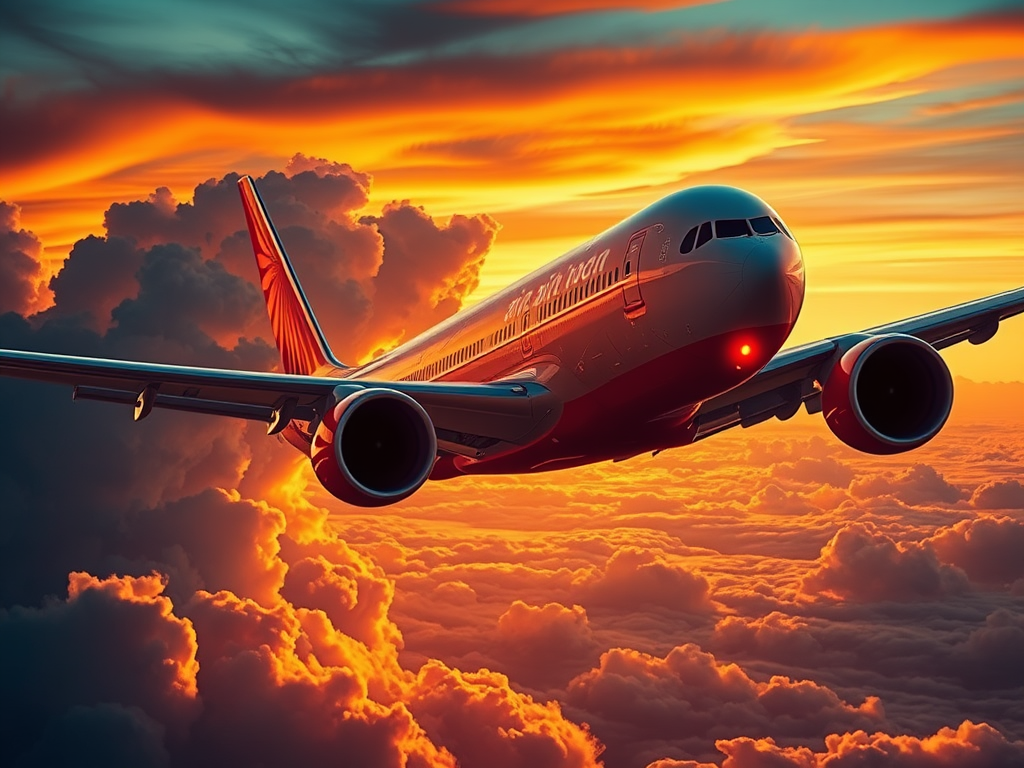
In an incident that underscores the growing concerns over airline maintenance and passenger experience, an Air India flight from Chicago to Delhi was forced to make an unexpected return journey after nearly half a day in the air.
The culprit? A catastrophic failure of the aircraft’s restroom facilities, leaving hundreds of passengers stranded in the sky with limited bathroom access.
An Unprecedented Mid-Air Crisis
Air India Flight 126, a Boeing 777-300ER, took off from Chicago O’Hare International Airport at 10:59 AM on March 5, heading for Indira Gandhi International Airport in Delhi. However, after spending over ten hours in the air, the aircraft turned back, landing at the very place it had departed from—Chicago—at 9:09 PM.
The reason? A staggering malfunction that reportedly left either nine or eleven out of the plane’s twelve toilets completely unusable. Reports conflict on the exact number, but the result was the same: the overwhelming majority of the aircraft’s lavatories were out of commission. According to the Times of India, the only operational restroom was in business class, leaving the vast majority of economy passengers without a functioning toilet for hours.
What Went Wrong?
In a carefully worded statement, Air India attributed the return to a “technical issue,” though independent aviation experts remain skeptical. Industry consultant Mark Martin told the Hindustan Times that while occasional clogged toilets are not uncommon due to improper disposal of diapers and tissues, a near-total failure of the vacuum system is almost unheard of. “For every lavatory on a long-haul flight to fail simultaneously suggests a broader mechanical failure,” Martin said.
This incident adds to a growing list of concerns regarding the state of Air India’s fleet maintenance. The airline, which was privatized in 2022 and taken over by the Tata Group, has been attempting to rehabilitate its reputation after years of operational and financial struggles. However, incidents like this highlight persistent issues that have plagued the carrier for decades.
Passenger Backlash and Airline Response
Following the emergency return, Air India assured passengers that they would receive full refunds or alternative travel arrangements. A spokesperson for the airline also confirmed that accommodations were provided in Chicago, though passengers have expressed frustration over the inconvenience and the lack of communication from the airline during the ordeal.
One passenger, who asked to remain anonymous, described the experience as “maddening.” “Imagine being stuck on a plane for ten hours and being told you have nowhere to go to the bathroom. People were livid,” he said.
The airline’s latest debacle also raises questions about Boeing’s aircraft reliability. While the 777-300ER is considered one of the most robust long-haul aircraft in service, any failure of this magnitude will inevitably call into question maintenance practices and airline accountability.
A Troubling Trend in Air Travel
This isn’t the first time a flight has been disrupted by a sanitation disaster. Just last August, a United Airlines flight from Germany to San Francisco had to be diverted after sewage overflowed into the cabin, a horror story that stunned travelers worldwide.
Incidents like these reflect a growing frustration among passengers regarding airline reliability and service quality. With airfares surging and consumer confidence in airlines wavering, such failures only add to the skepticism surrounding the industry’s ability to prioritize passenger comfort and safety.
For Air India, which has been attempting to modernize under new management, this latest embarrassment underscores the long road ahead in restoring trust and reliability in its operations. As the global aviation industry faces increasing scrutiny, one thing is clear—passengers deserve better than being trapped at 30,000 feet with nowhere to go.
Discover more from True News Media
Subscribe to get the latest posts sent to your email.
Simply turn back after a 1,500 miles?